Webflow Website Builder: Is It Worth It in 2026?
An honest look at the Webflow website builder in 2026: what it costs, what you get, the learning curve, and who it is worth it for.
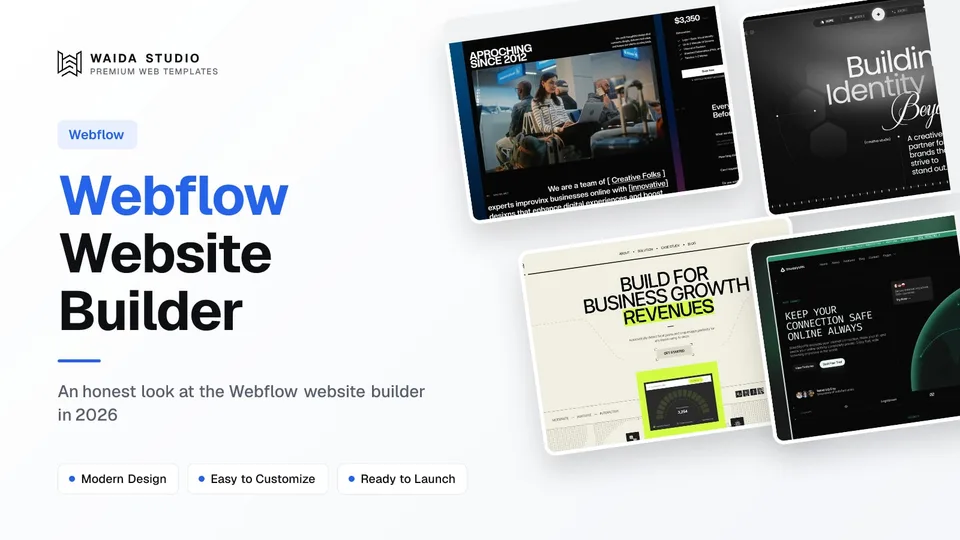
Yes, the Webflow website builder is worth it if you are a designer, freelancer or agency building marketing sites with a CMS and handing them to clients. It is not worth it for a small shop or a business owner who wants a site live this weekend. Paid site plans start at $15 a month billed yearly.
This review covers what Webflow costs today, what the money buys, where it falls short, and who should choose something else. Every price and limit below was taken from Webflow's own pages on 10 October 2026. If you want the broader introduction first, start with our complete guide to Webflow websites.
What Webflow Is in 2026
Webflow is a hosted visual website builder that works like a design tool on top of HTML and CSS. You style classes, set breakpoints and model content in CMS collections, and Webflow hosts the published site. It now calls itself an agentic web platform, with AI and an MCP server listed on every site plan.
The core idea has not changed: what you design on the canvas is what gets published, as clean markup, with no theme locking you in. Around that core, the Webflow homepage now lists AI site building, built-in analytics and answer-engine (AEO) tools, and says the platform is trusted by over 300k teams. Most of those extras are add-ons or higher plans; the builder itself is the part most people pay for.
What the Webflow Website Builder Costs
Webflow charges per site, plus an optional Workspace plan for your account. A site starts free on the Starter plan, moves to Basic at $15 a month for a custom domain, and to Premium at $25 a month when it needs the CMS. Both prices are billed yearly; monthly billing is $25 and $39.
Plan | Price (billed yearly) | What it unlocks |
|---|---|---|
Starter site | Free | webflow.io domain, 2 static pages, limited CMS (50 items), 1 GB bandwidth, 50 form submissions |
Basic site | $15/mo ($25 monthly) | Custom domain, 300 static pages, 10 GB bandwidth, unlimited form submissions, no CMS |
Premium site | $25/mo ($39 monthly) | Everything in Basic plus the CMS (40 collections, 20,000 items), 50 GB bandwidth to start, site search |
Ecommerce site | $29, $74 or $212/mo | 500, 5,000 or 15,000 products; 2% transaction fee on Standard, 0% on Plus and Advanced |
Workspace: Core or Freelancer | $19 or $16/mo | 10 staging sites; Core adds code export, Freelancer adds full CMS on staging sites and client payments |
Workspace: Growth or Agency | $49 or $35/mo | Unlimited staging sites, 301 redirects, publishing permissions |
Source: Webflow pricing, checked on 10 October 2026. Prices are in US dollars per site, plus tax at checkout, and the page advertises savings of up to 40% for yearly billing. Premium bandwidth can be raised in steps up to 2.5 TB a month for an extra fee.
Two details catch people out. The Basic plan has no CMS, so a site with a blog needs Premium from day one. And a free Workspace lets you stage two sites on webflow.io; past that, you need a paid Workspace or a paid site plan. Our Webflow pricing guide walks through every plan in more depth.
What You Get for the Money
You get precise design control, a structured CMS, hosting with a global CDN, and a clean way to hand a site to a client. Those four together are what Webflow does better than most builders, and they are why agencies keep paying for it.
- Design control. Classes, flexbox, grid and breakpoints behave like hand-written CSS, so a change to one class updates every element that uses it.
- A real CMS. On Premium you get 40 collections and 20,000 items, with per-item and scheduled publishing, which suits blogs, case studies, team pages and locations.
- Hosting included. Every paid plan publishes through Webflow's global CDN with automatic backups and one-click restore; you never set up a server.
- Client handover. Sites can be transferred between Workspaces, and each paid site comes with a free client seat (three on the Agency Workspace plan), so a client can edit content without touching the design.
- Code export. On a paid Workspace you can export HTML and CSS, although Webflow notes that CMS items and pages can't be exported.
Interactions and animation are built visually too, and paid Workspaces add custom code. If you are weighing Webflow against the other designer-first builder, our Webflow vs Framer comparison covers animation, CMS and pricing side by side.
Where Webflow Falls Short
Webflow's weak points are the learning curve, the way costs stack up, and selling online. None of them are deal-breakers for a designer, but each one is a real cost for a beginner or a small shop.
The learning curve is real. Webflow expects you to understand the box model, classes and responsive breakpoints. A beginner who has never written CSS will spend the first week learning how a page is structured. Webflow University offers free courses and tutorials, which helps, but it is still a week, not an afternoon.
Costs stack. The price is per site, so ten client sites mean ten site plans, plus a Workspace plan for staging, plus add-ons such as Localize, Analyze or Optimize. That is fair for an agency that bills clients for hosting, and expensive for a hobbyist.
Ecommerce is limited. The Standard ecommerce plan caps you at 500 products and takes a 2% transaction fee, according to Webflow's pricing page. A dedicated store platform gives a growing shop more room. Webflow is strongest as a marketing site, not a store.
Who Webflow Is Worth It For
Webflow is worth it for people who will use its depth: designers who think in layout and type, freelancers and agencies who build sites for clients, and in-house marketing teams that publish a lot of structured content.
You are… | Is Webflow worth it? | Why |
|---|---|---|
A web designer or freelancer | Yes | Full layout control, client seats and site transfer fit client work |
An agency | Yes | Per-site billing maps to per-client hosting; Agency Workspace adds unlimited staging |
A marketing team with a blog | Yes, on Premium | The CMS handles collections, scheduling and per-item publishing |
A startup founder | Maybe | Worth it from a template; slow if you build from a blank canvas |
A small business owner | Usually not | An all-in-one builder is faster to learn and includes bookings and payments |
An online store | Usually not | Product caps and fees on the entry ecommerce plan |
If you build agency or studio sites, starting from a template that already has the classes and CMS collections in place saves most of the setup work; the last section of this review shows three of ours.
Who Should Look Elsewhere
Look elsewhere if you need a site live quickly without learning web layout, if selling products is the main job, or if you want motion-heavy pages built as fast as possible. Each of those has a better-fitting tool.
For a small business that needs bookings, payments and an easy editor, an all-in-one builder is simpler; our Webflow vs Wix comparison explains where Wix wins. For designers who want to work in a Figma-like canvas and publish fast, Framer is the usual alternative, and our review of whether Framer is worth it answers the same question for that tool.
How to Make Webflow Worth It Faster
Start from a template. The steepest part of learning Webflow is building the class system, the responsive settings and the CMS collections, and a good template has all three done. You then spend your time editing content and colours instead of structuring a page from nothing.
Webflow's own marketplace lists more than 7,000 free and premium templates, according to Webflow's template marketplace. Independent studios sell them too. If you already have a design in Figma, our guide to moving a design from Figma to Webflow shows the workflow and its limits.
Webflow Templates from Waida Studio
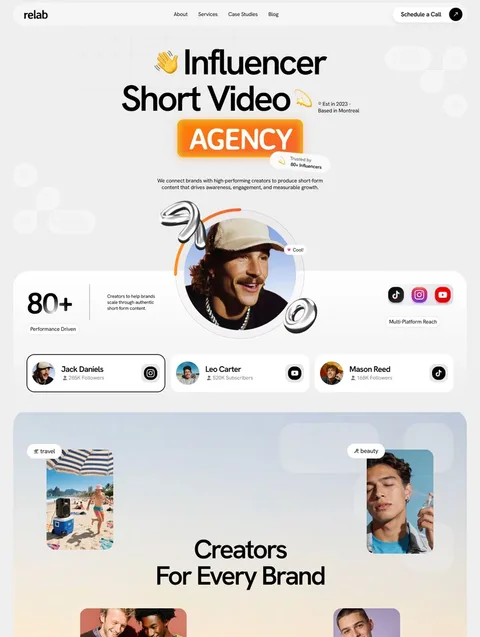
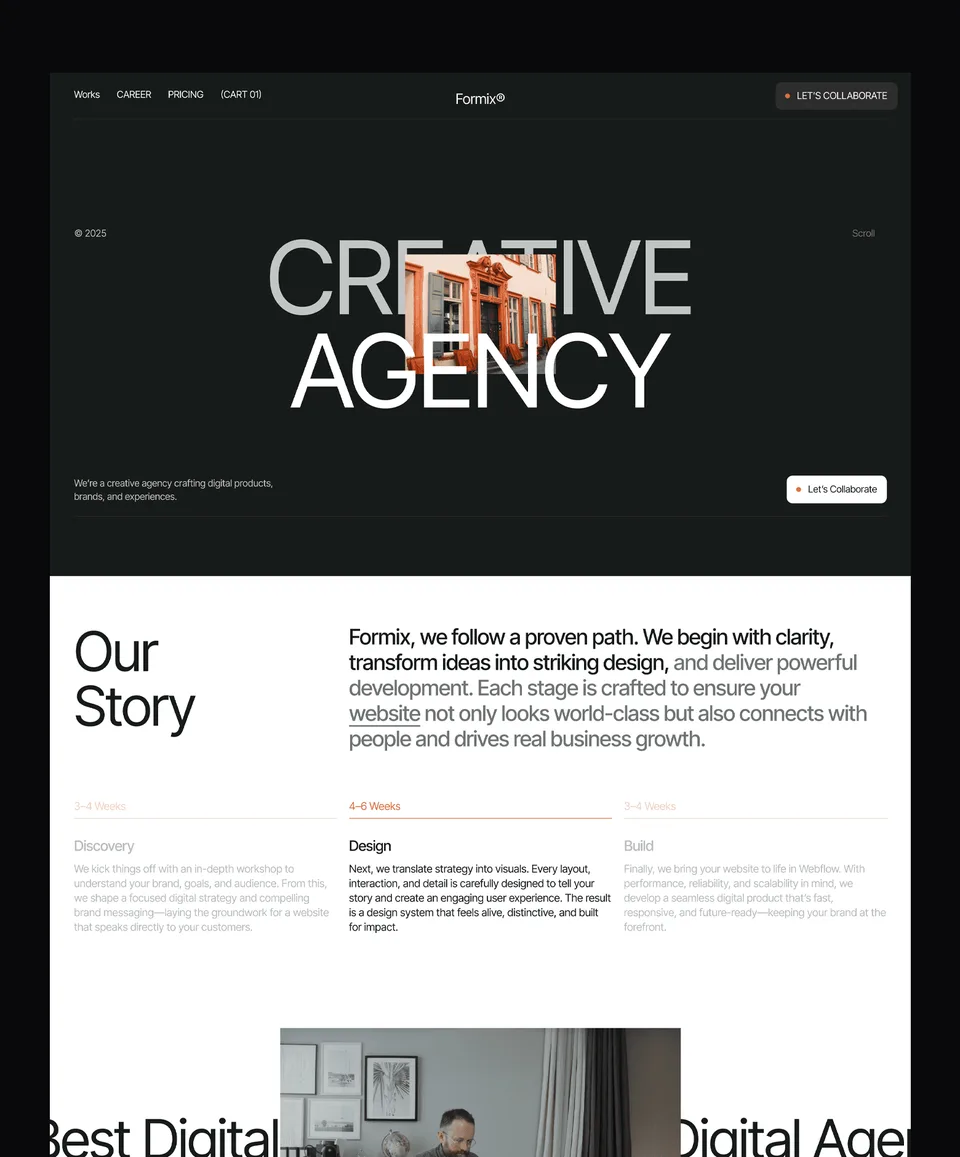
The three templates below are our own Webflow builds. Each comes as a complete multi-page site you clone into your Webflow account, with classes, components and CMS collections ready to edit.
Our own templates: the three below are Waida Studio templates; we made them. Zelda is free with a free Waida account, Figma file included. Other Figma files are sold separately ($19 each).
Zelda: dark design agency template (free)

Zelda is a sleek, dark template for design agencies, creative studios and portfolios. It is free on Webflow with a free Waida account, so it is a no-cost way to see how a well-structured Webflow build is put together before you pay for a site plan.
Minux: creative studio template ($79)

Minux is a dark, monochrome template for creative studios, branding agencies and design teams, with services, case studies, a journal and pricing. The Webflow version is $79.
Avande: AI automation agency template ($99)

Avande is an editorial, technical template for AI automation agencies and consultancies, with solutions, case studies, a blog and pricing pages. The Webflow version is $99.
Webflow templates to start from
All 36 Webflow templates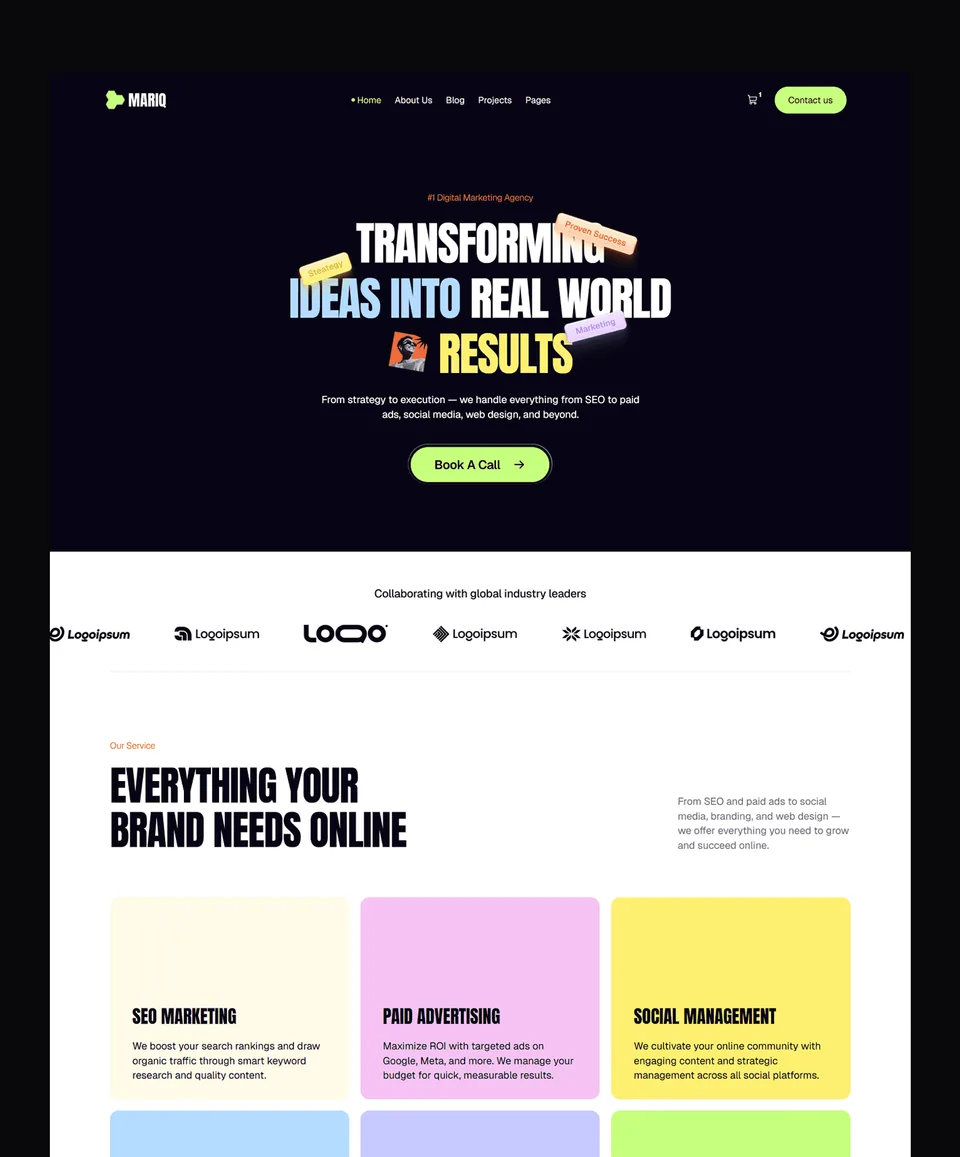


Frequently asked questions
Is Webflow worth it for beginners?
Only if you are willing to learn how web layout works. Webflow uses classes, flexbox and breakpoints, so beginners need a week or so with its free University courses. Starting from a template shortens that a lot.
How much does the Webflow website builder cost?
A site is free on the Starter plan with a webflow.io domain. Basic costs $15 a month and Premium, which adds the CMS, costs $25 a month, both billed yearly, according to Webflow's pricing page.
Is Webflow better than WordPress or Wix?
Webflow is better for designers who want visual control and hosting in one place. WordPress suits teams that want a large plugin ecosystem, and Wix suits business owners who want an easy editor with bookings and payments built in.
Can I use Webflow for free?
Yes. The Starter plan is free and publishes to a webflow.io subdomain with 2 static pages, 50 CMS items and a Made in Webflow badge. A custom domain needs a paid site plan.
Can I export my code from Webflow?
Yes, on a paid Workspace plan you can export HTML and CSS. Webflow states that dynamic content, meaning CMS items and CMS pages, can't be exported.
Is Webflow good for client websites?
Yes. Sites can be transferred between Workspaces, and Webflow includes a free client seat per paid site, three on the Agency Workspace plan, so clients can edit content without changing the design.
The Webflow website builder is worth it when design control, a structured CMS and clean client handover matter to you, and when you build enough sites to learn it properly. It costs $15 a month per site for a custom domain and $25 a month with the CMS, billed yearly. If you want a store or a site live by the weekend, a simpler builder will serve you better.
To cut the learning curve, start from one of our Webflow templates: Zelda and Medonix are free with a Waida account, the rest are $59 to $129, and all of them are $159 in the Webflow bundle. Each comes with a licence for unlimited personal, commercial and client projects under our terms, or you can unlock templates with credits on a Pro or Ultra plan.

More from Kazi
Related articles
More in Webflow
Figma to Webflow: Plugin, Workflow and Limits in 2026
How to move a Figma design into Webflow with Webflow's own plugin and app: what syncs, what to prepare, the limits, and what publishing costs.
Webflow Pricing in 2026: Site Plans, Workspaces and Real Costs
Every Webflow plan and add-on in 2026, the difference between Site and Workspace plans, and what a site built from a template really costs in its first year.

Best Webflow Portfolio Templates: 12 Picks for Designers, Photographers and Studios in 2026
Twelve Webflow portfolio templates for photographers, filmmakers, designers and studios: nine of ours and three from independent designers, with who each one suits.