Webflow vs Wix: Which to Choose in 2026
Webflow vs Wix in 2026: Webflow for designers and agencies who want full control, Wix for business owners who want bookings, payments and an easy editor in one place.
Choose Webflow if you are a designer or agency that wants precise layout control, a structured CMS and easy client handover; choose Wix if you run a small business and want an easy editor with bookings, payments and a store built in. Both have free plans; Webflow's paid site plans start at $15 a month billed yearly, and Wix's prices vary by country.
Both are hosted website builders, so neither needs separate hosting. The difference is who each one is built for. Webflow works like a visual front of HTML and CSS: you style classes, set breakpoints and model content in collections. Wix starts from a drag-and-drop editor and a large library of business apps. This comparison uses facts taken today from both companies' own pricing and help pages, and says where each one runs out.
Webflow vs Wix at a Glance
Webflow wins on design control, CMS structure and clean client handover; Wix wins on ease of use, built-in business tools and getting a small business online quickly. Both offer a free plan without a custom domain. The main practical differences are how pricing works, how much the editor lets you control, and whether you can change the design later.
Webflow | Wix | |
|---|---|---|
Free plan | Starter: webflow.io domain, 2 static pages, 1 GB bandwidth, 50 form submissions | Free plan with Wix branding and no custom domain; no credit card required |
Paid site plans | Basic $15/mo and Premium $25/mo, billed yearly ($25 and $39 billed monthly) | Light, Core, Business and Business Elite; prices and currency vary by location |
How you design | Visual editor over HTML and CSS: classes, flexbox and grid, breakpoints | Drag-and-drop editor; Wix Studio adds a responsive editor and custom CSS |
CMS | Not on Basic; Premium has 40 collections and 20,000 items | Wix CMS for dynamic content without code |
Selling online | Separate ecommerce plans from $29/mo billed yearly | Payments and a product catalogue on Core and above |
Templates | Webflow Marketplace plus third-party templates you clone | 2,000+ Wix templates |
Change design later | Restyle anything; no locked theme | Can't switch the template of an existing site |
Collaborators | Seats come with Workspace plans; the Team plan includes 5 full and 5 limited seats | 2 on Light, 5 on Core, 10 on Business, 100 on Business Elite |
Sources: Webflow pricing, Wix plans, Wix Studio and Wix's help article on switching a site's template, all checked on 8 October 2026. Webflow prices are in US dollars per site before tax.
Design Control: Webflow Goes Deeper
Webflow gives you more control. You build with the same concepts as hand-written CSS: classes, flexbox, grid and breakpoints, and the published site follows exactly what you set. The classic Wix Editor is easier to start with because you place elements freely, but it gives you fewer tools for keeping a large site consistent.
Wix knows this, which is why it built Wix Studio, which it describes as a web platform for agencies and enterprises. Its homepage lists a responsive editor that lets you design in pixels on a canvas, no-code animations with scroll, loop, click and hover triggers, and custom CSS. That closes much of the gap for designers, though you still work inside the Wix platform and its app model.
In Webflow, interactions are built visually too: the pricing page lists classic Interactions and a newer timeline editor powered by GSAP. If animation and fine typography are the reason you are building the site, Webflow and Framer are the two tools to compare; our Webflow vs Framer comparison covers that choice.
Ease of Use: Wix Is Faster to Learn
Wix is faster to learn. A business owner with no design training can pick a template, change the text and photos, and publish the same day. Webflow expects you to understand how a web page is structured, so the first week is slower, even when you start from a template.
The trade-off shows up later. Because Webflow's styles are classes, changing the button style once changes every button on the site. On a freely placed Wix page, consistency depends on how carefully the site was built. For a five-page site that rarely changes, this hardly matters. For a 40-page site that a team edits every week, it matters a lot.
Starting from a well-built template narrows the learning curve on both platforms. With a Webflow template, the classes, components and responsive settings already exist; you mostly edit content and swap colours. Our guide to moving a design from Figma to Webflow shows how much of that structure a good template saves you from building.
Templates: You Can't Switch Templates on Wix
This is the difference most people find out too late. Wix's own help article says it is not possible to switch to a different template for a site you already created. To change design, you create a new site from another template and move content across. In Webflow, there is no locked theme: every page, class and component stays editable.
Wix's help page lists what does not carry over when you start again, including the site theme, design and layout, and its related article notes you cannot copy headers and footers, datasets and collections, or code on elements and pages between sites. Choosing a Wix template is therefore close to a permanent decision for that site, so pick carefully.
Wix advertises more than 2,000 templates on its plans page, so choice is not the problem; flexibility after launch is. Webflow's template marketplace and independent shops sell templates that you clone into your account, then reshape freely. Browse our Webflow templates to see what a complete multi-page build looks like before you commit to either platform.
CMS and Selling Online
Webflow's CMS is the stronger tool for structured content such as blogs, case studies and team pages; Wix's built-in business apps are stronger for selling, bookings and memberships. On Webflow, the CMS starts on the Premium site plan, and a store needs a separate ecommerce plan.
Webflow's Premium plan includes 40 CMS collections and 20,000 items, with per-item and scheduled publishing; the Basic plan is described as for simple sites that don't need a CMS. Webflow's ecommerce plans are billed separately: Standard at $29 a month with a 2% transaction fee, Plus at $74 with 0%, and Advanced at $212 with 0%, all billed yearly, according to Webflow's pricing page.
On Wix, accepting payments, selling subscriptions and a catalogue of up to 50,000 products start on the Core plan; the Light plan does not include them. Wix charges a transaction fee on pricing plans you sell: 4% on Core, 2% on Business and 0% on Business Elite, according to Wix's plans page. Bookings and services scheduling are part of the same plans.
If the site is mainly a shop or a booking calendar for a local business, Wix is the more complete package. If it is a marketing site with a blog and case studies, Webflow's CMS is easier to model and keep tidy.
Prices: How Each One Charges
Webflow charges a flat US dollar price per site, published on its pricing page. Wix shows prices in your local currency and says prices and currency vary by location, with US dollar figures shown for reference only. So the honest comparison is structural: what each plan unlocks, then the price your own country sees.
Plan | Price | What it unlocks |
|---|---|---|
Webflow Starter | Free | webflow.io domain, 2 static pages, 50 CMS items, Made in Webflow badge |
Webflow Basic | $15/mo yearly, $25 monthly | Custom domain, 300 static pages, 10 GB bandwidth, no CMS |
Webflow Premium | $25/mo yearly, $39 monthly | Everything in Basic plus the CMS, 50 GB bandwidth to start, site search, code components |
Wix Free | Free | Wix branding, no custom domain, drag-and-drop editor, templates |
Wix Light | Varies by country | Custom domain, no Wix branding, 2 GB storage, 2 collaborators; no payments |
Wix Core | Varies by country | Payments and store, 50 GB storage, 5 collaborators |
Wix Business | Varies by country | 100 GB storage, 10 collaborators, automated sales tax |
Wix Business Elite | Varies by country | Unlimited storage, 100 collaborators, priority care |
Wix's paid plans include a voucher for one free year of a new domain and a 14-day money-back guarantee, and the displayed prices are for yearly subscriptions paid upfront. Webflow adds tax at checkout and offers higher bandwidth tiers on Premium for a higher price. For Webflow's plans in detail, see our Webflow pricing guide.
Neither price includes design work. A template is the cheapest way to cover it, and our breakdown of how much a website costs compares templates, freelancers and agencies.
Which Is Better for Agencies and Freelancers?
For agencies that design custom sites and hand them to clients, Webflow is the usual choice: the build is clean, the CMS gives clients a safe place to edit, and each site is billed on its own plan. Wix Studio is Wix's direct answer for agencies, and it suits studios whose clients need Wix's business apps.
Webflow prices its site plans per site, so each client site carries its own hosting cost rather than sharing one account-wide plan. Wix Studio offers a partner programme and tools for managing projects, teams and clients from one place, according to its homepage. Whichever you choose, a ready template turns a two-week build into a few days of editing; see our agency website templates for examples on both no-code platforms we support.
Webflow Templates from Waida Studio
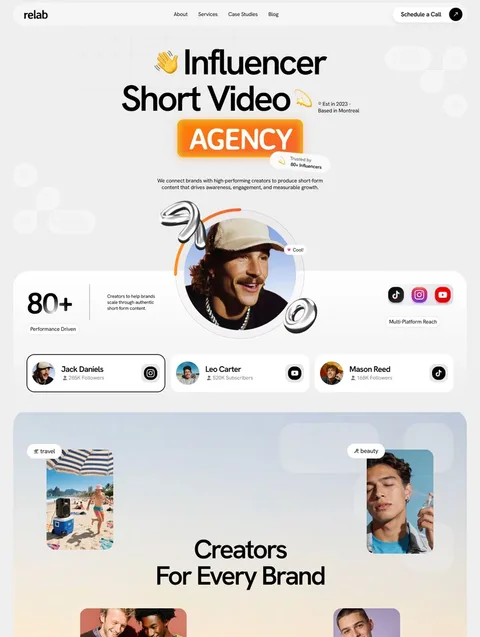
If you have chosen Webflow, a template gives you a working multi-page site with the classes and responsive settings already built. Waida Studio does not make Wix templates. The three below are our own Webflow templates, and each is also available for Framer, HTML, Next.js and Astro.
Our own templates: the three below are Waida Studio templates; we made them. Zelda and Medonix are free with a free Waida account. Figma files are sold separately ($19 each), except Zelda's and Medonix's, which are free.
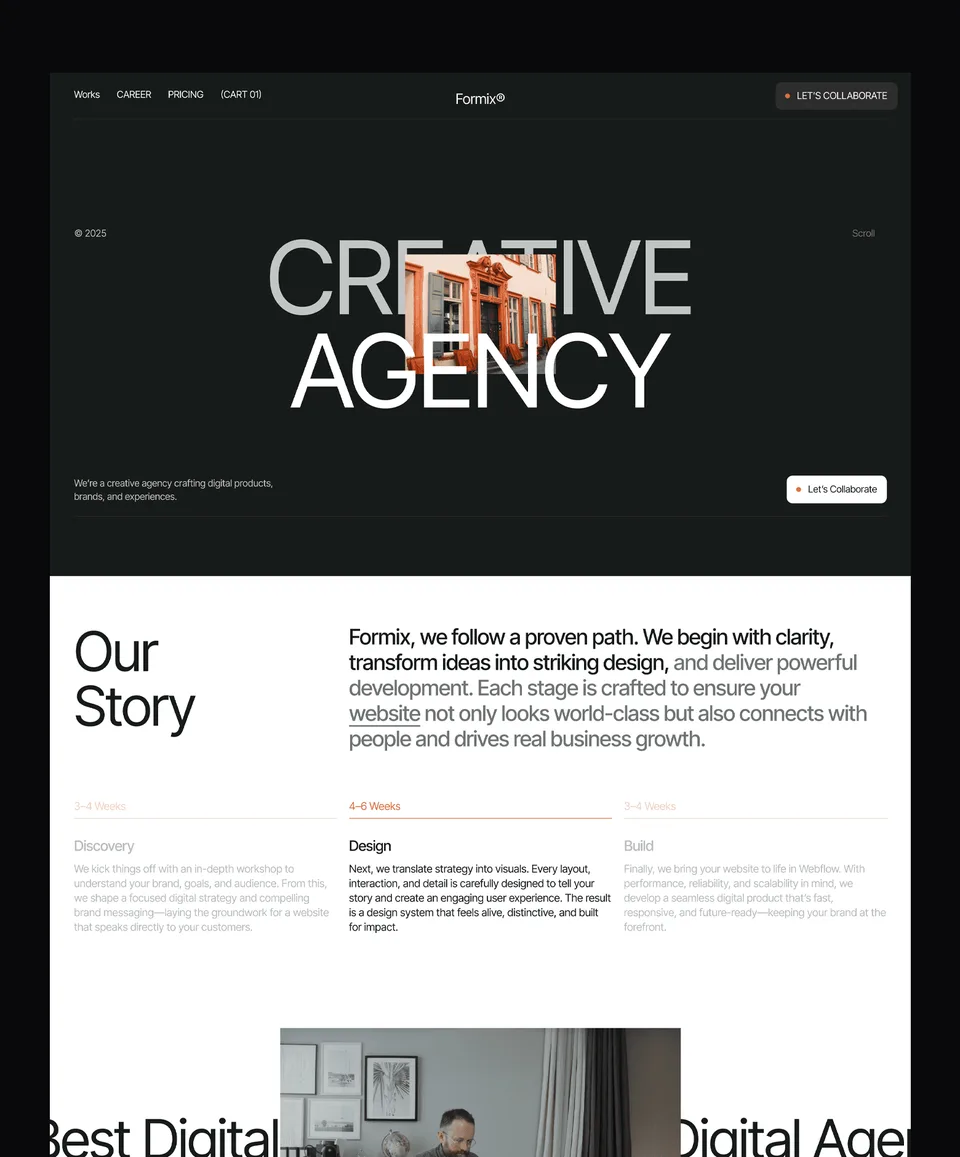
Zelda: dark design agency template (free)

Zelda is a dark, modern template for design agencies and creative studios. It is free on Webflow with a free Waida account, Figma file included, so it is a no-risk way to see how a structured Webflow build is put together.
Mariq: marketing agency template ($79)

Mariq is built for marketing agencies, startups and creative teams, with CMS-powered pages for services and case studies. The Webflow version is $79, and it is a good fit if you came to this comparison because you are moving an agency site off Wix.
Medonix: medical SaaS startup template (free)

Medonix is a medical SaaS template for health-tech startups, clinics and medical professionals. Like Zelda, it is free on Webflow with a free Waida account, Figma file included.
Templates to start from
All 42 templates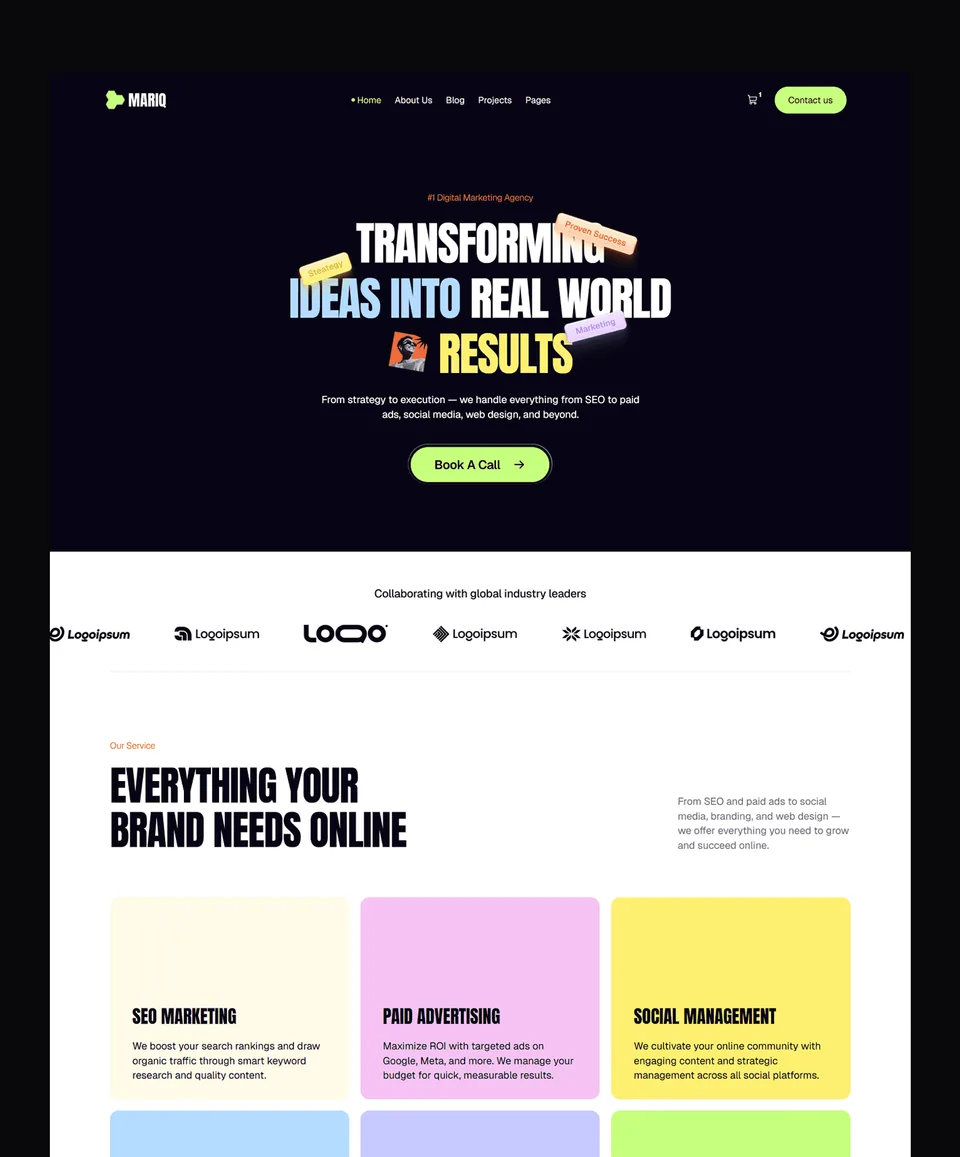


Frequently asked questions
Is Webflow better than Wix?
Webflow is better for designers and agencies who want precise layout control, a structured CMS and clean client handover. Wix is better for small business owners who want an easy editor with bookings, payments and a store built in.
Is Webflow harder to use than Wix?
Yes. Webflow works with classes, flexbox, grid and breakpoints, so it takes longer to learn. Wix's drag-and-drop editor lets a beginner publish a site the same day, especially from a template.
Can I change my Wix template later?
No. Wix's help centre says it is not possible to switch the template of a site you already created. You create a new site from another template and move your content across, and some elements cannot be copied.
How much does Webflow cost compared with Wix?
Webflow's site plans are $15 a month (Basic) and $25 a month (Premium) billed yearly, with a free Starter plan. Wix has a free plan and four paid plans whose prices and currency vary by country.
Is Wix Studio the same as Wix?
Wix Studio is Wix's platform for agencies and enterprises. It adds a responsive editor, custom CSS, no-code animations and client management tools to the Wix platform, and competes more directly with Webflow.
Can I move a site from Wix to Webflow?
There is no one-click migration, so you rebuild the design in Webflow and move the content. Starting from a Webflow template with a similar layout is usually the fastest route.
Webflow vs Wix comes down to who will build and who will edit. Pick Webflow when design control, a structured CMS and a clean handover matter; pick Wix when a business owner needs bookings, payments and a store working this week without learning how web pages are built. Remember that a Wix site's template can't be swapped later, while a Webflow site can be restyled at any time.
If Webflow is your answer, start from one of our Webflow templates: two are free with a Waida account, the rest are $59 to $129, and all of them are $159 in the Webflow bundle. Each comes with a licence for unlimited personal, commercial and client projects under our terms, or you can unlock templates with credits on a Pro or Ultra plan.

More from Kazi
Related articles
More in Comparisons
Framer vs Squarespace: Which to Choose in 2026
Framer vs Squarespace in 2026: Framer for designed marketing sites and portfolios, Squarespace for selling, bookings and an all-in-one setup.
How Much Does a Website Cost in 2026? Real Numbers by Route
What a website really costs in 2026, route by route: domain, hosting, template, freelancer or custom build, with first-year totals from prices checked today.
Framer vs Wix: Which Builder Is Right for Your Site in 2026?
Framer vs Wix in 2026 — design control, e-commerce, AI features, learning curve, and pricing. Honest comparison from a Framer studio.