Ecommerce Website Templates
Ecommerce website templates for product-led brands: storefronts, product pages and the supporting content that sells them.
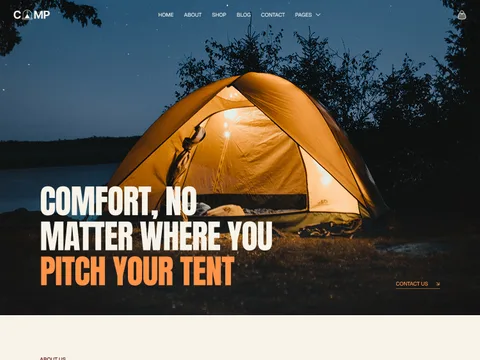

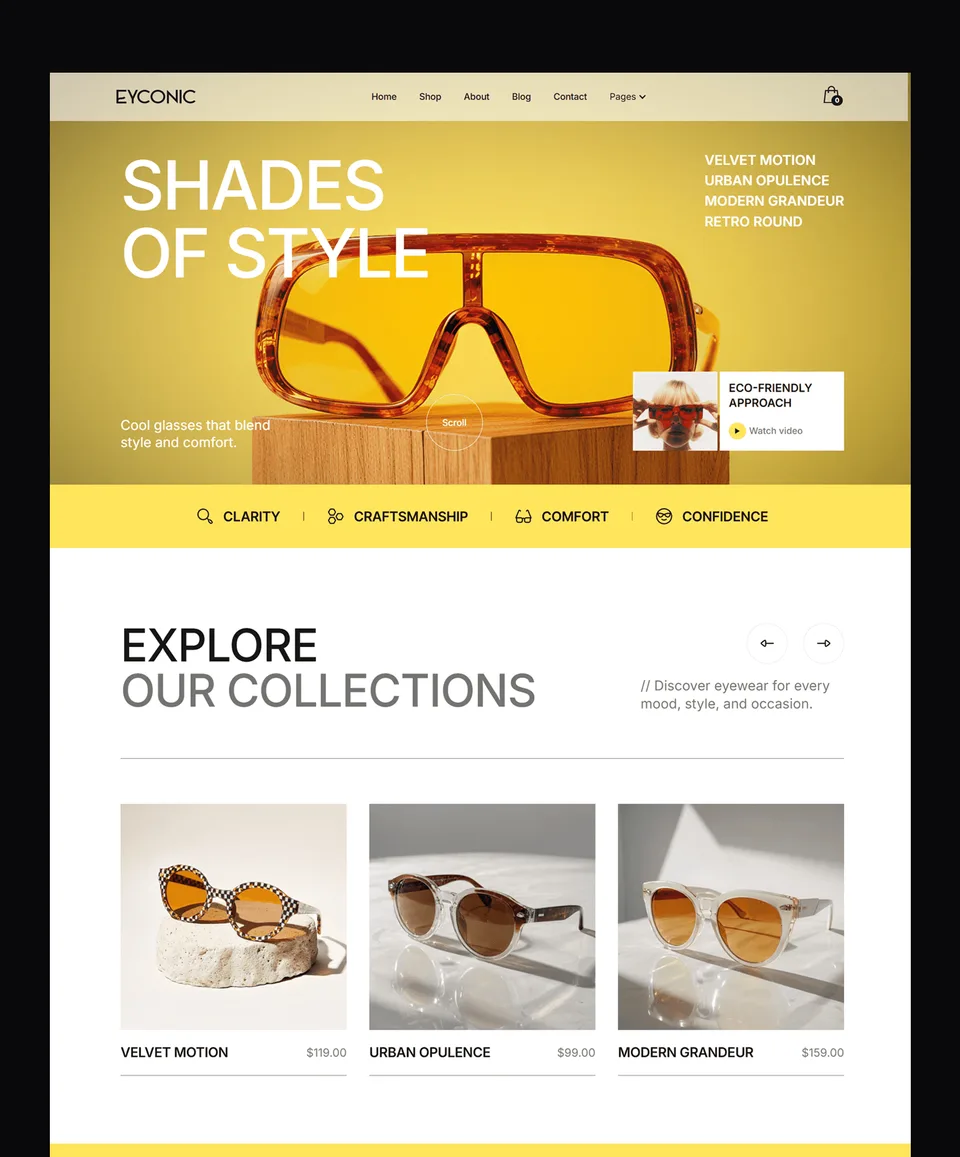




Design for the product, plumbing to taste
These four templates cover the storefront side of selling: collection and product layouts, a cart and checkout flow, and the brand pages that do the persuading — story, materials, sustainability, care, FAQ. They are designed for brands where the product needs presenting rather than merely listing: beauty, apparel, food, equipment, homeware.
What they are not is a full commerce backend. Webflow has its own commerce features on its Ecommerce plans; Framer has no built-in store, so a Framer shop needs a third-party checkout. Camp and Auréva's code versions ship with a working cart and checkout pages, and all the code versions are designed to sit in front of whatever you already use — Shopify, Stripe, a headless commerce API. That separation is deliberate: the part worth buying is the design system and the structure, and the part worth keeping flexible is the payments and inventory.
Where e-commerce templates earn their keep
Product photography carries a store, and a template's real job is to give it room without letting the page become a gallery with a price attached. These layouts hold detail pages with multiple images, variants, specifications and reviews without the page collapsing into scroll.
If you sell a small number of considered products, the same designs work well trimmed down. If you are selling a service rather than a product, the business templates will fit better than a storefront will.
Ecommerce website templates by platform
- HTML, Next.js and Astro: all four templates. Camp and Auréva run a complete shop in the browser, with a catalogue, product variants, a cart that remembers its contents and a checkout, ready to connect to the payment provider you choose.
- Webflow: Eyeconic and Grin Golf. Selling through Webflow needs one of its Ecommerce plans, from $29 a month billed yearly with a 2% transaction fee on the Standard plan (checked on 11 September 2026).
- Framer: Eyeconic. Framer has no built-in checkout, so the Framer version suits a brand site that sends buyers to a separate store or a third-party checkout.
Buy the version you need, or take a platform bundle or a plan.
Frequently Asked Questions
Do these templates include a working checkout?
Camp and Auréva's code versions do: a cart that remembers its contents between pages, a checkout with an order summary, and PayPal checkout and confirmation pages, ready for you to connect a payment provider. On Webflow, checkout runs on Webflow's Ecommerce plans. Framer has no built-in checkout, so a Framer store needs a third-party one.
Can I use these with Shopify?
The HTML, Next.js and Astro versions are designed to sit in front of a commerce API, Shopify included. They are not Shopify themes, so the integration is a development task rather than an install.
How many products do they handle?
The collection layouts stay readable well into the hundreds. For very large catalogues, filtering and search usually need a dedicated commerce platform behind them rather than a template.
Do product pages support variants and multiple images?
Yes. Product detail layouts handle image galleries, variant selection, specifications and review sections without the page becoming an endless scroll.
Is there a bigger e-commerce selection coming?
This is the smallest collection at four templates, and new templates release monthly. A platform bundle includes every future release on that platform, which is the way to catch new e-commerce templates as they land.