Restaurant Website Design: What a Restaurant Site Needs in 2026
What a restaurant website needs in 2026: hours and address on the first screen, a menu in text, one booking button, direct online ordering and fast photos.
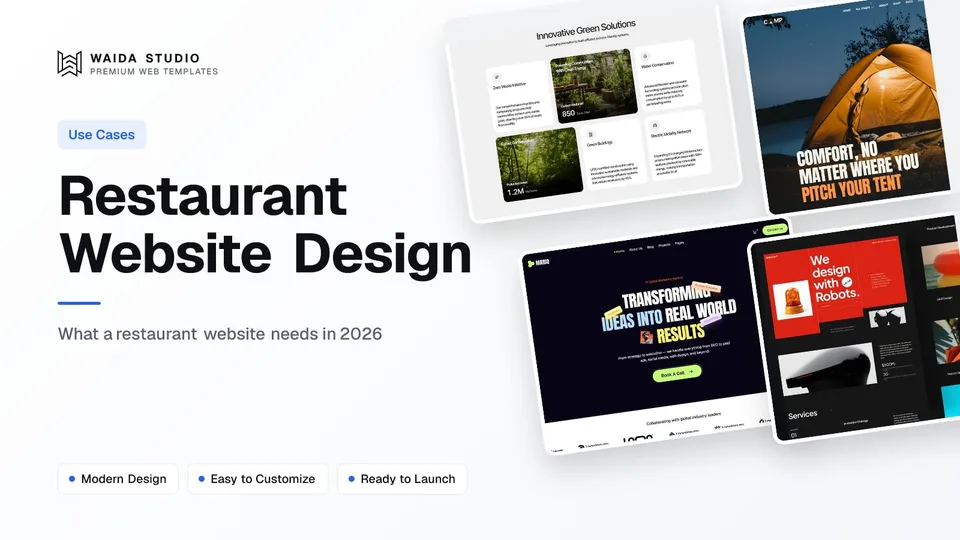
Good restaurant website design answers four questions within seconds on a phone: are you open, where are you, what is on the menu, and how do I book or order. Put hours, address and one booking or ordering button on the first screen, keep the menu as text, and let the photos sell the food.
The Pages a Restaurant Website Needs
Most restaurants need six pages, and two of them do most of the work: the home page and the menu. The rest answer the questions a guest has before they book a table, order a meal or plan a private event.
Page | What the guest wants from it | What to put on it |
|---|---|---|
Home | Are you open, and where are you? | Today's hours, the address, a map link and one button to book or order, all on the first screen |
Menu | What can I eat, and what does it cost? | Every dish as text with its price, dietary labels and allergens, split by service |
Book or order | Can I get a table or food tonight? | Your booking widget or ordering link, with party-size and pickup notes |
About | What kind of place is this? | The chef or owners, the cooking and the room, in a few short paragraphs |
Private dining and events | Can you host my group? | Capacity, sample menus, minimum spend and an enquiry form |
Contact | How do I reach you? | Phone, email, address, parking, step-free access and the hours again |
Add a Gift Cards page if you sell them, and a Jobs page if you hire often. Keep the menu bar to five or six items, with Book or Order styled as a button so it stands out on a small screen.
The home page works like a landing page with one job. The structure in how to make a landing page applies, with "book a table" or "order now" as the single action.
Put the Menu in Text, Not a PDF
Publish the menu as live text on its own page, not as a PDF or a photo of the printed card. Text loads faster on a phone, can be read by screen readers and search engines, and takes a minute to update when a dish or a price changes.
- Split by service: lunch, dinner, drinks and desserts, with the hours each one is served.
- Show prices: guests compare before they book, and a missing price reads as an expensive one.
- Label dietary options: vegetarian, vegan and gluten-free markers, with a short key at the top.
- List allergens or say how to ask: a line such as "Tell your server about any allergies" is the minimum.
- Date seasonal menus: write "Autumn menu, from 1 October" so a guest knows it is current.
- Offer a printable copy as well, linked under the text menu, never in place of it.
Calorie labelling in the US. The FDA's menu labeling requirements apply to restaurants that are part of a chain with 20 or more locations, doing business under the same name and offering substantially the same menu items. Those restaurants must show calories for standard items on menus and menu boards. The FDA page doesn't say how this applies to online menus, so a chain should check with its own advisers.
A text menu also suits a CMS. Store each dish as an entry with a name, description, price, section and dietary tags, and the menu page builds itself. When a dish changes, you edit one entry instead of redesigning the page.
Reservations and Online Ordering
Use a dedicated tool for bookings and orders, and let the website send guests to it in one tap. A website can show a menu and a button; a booking system handles table times, covers and no-shows, and an ordering system handles payment, tickets and the kitchen.
Bookings. Embed your reservation provider's widget on the Book page, or link to it from a button in the header. Show the party size you take online and a phone number for larger groups, so a guest doesn't hit a dead end.
Ordering. The channel you send guests to changes what each order costs you. Uber Eats publishes its rates on its merchant pricing page: marketplace delivery fees of 20%, 25% or 30% depending on the plan, against a 2.5% processing fee plus $0.29 per order for its own-website ordering tool.
Ordering channel (Uber Eats, checked 9 October 2026) | What the restaurant pays | Who owns the customer |
|---|---|---|
Marketplace delivery, Lite plan | 20% marketplace fee (lower in some listed cities) | The app |
Marketplace delivery, Plus plan | 25% after a 30-day 0% intro rate | The app |
Marketplace delivery, Premium plan | 30% after a 30-day 0% intro rate | The app |
Marketplace pickup | 7% with validated in-store pricing, 10% without | The app |
Webshop, ordering on your own site | 2.5% processing fee + $0.29 per order | You |
Uber Direct, delivery for your own orders | Starts at $7.99 per delivery | You |
The pattern is the same with most providers: orders that start on your own website cost less and leave you with the guest's details. Put an Order button on your site that goes to your direct ordering page first, and keep the marketplace apps as a second route for people who already use them.
Hours, Location and Local Search
Guests check the hours and the address before they set out, so the hours and address on your site must be correct, identical everywhere and readable by machines. Write them as live text on the home and contact pages and in the footer, and mark them up with structured data so search engines can read them without guessing.
schema.org has a Restaurant type, a kind of FoodEstablishment and LocalBusiness. It supports the properties a restaurant needs:
- openingHoursSpecification for regular hours, with separate entries for each service if you close between lunch and dinner
- hasMenu for the menu page URL
- acceptsReservations as true, "Yes" or the URL of your booking page
- servesCuisine for the cuisine, such as "Neapolitan pizza"
- address, telephone and geo, matching your Google Business Profile word for word
When hours change for a holiday, update the website, the structured data and your Google Business Profile on the same day. A guest who arrives at a closed door because the website was wrong rarely gives it a second try.
Photos, Speed and Accessibility
Food photos sell a restaurant, but large photos are also what makes a restaurant site slow. Use a few strong images, compressed and sized for the screen, and build the page so the hours and the booking button appear before the photo gallery has finished loading.
- Speed: Google's guidance is a Largest Contentful Paint of 2.5 seconds or less, measured at the 75th percentile of page loads. The hero photo is usually the largest element, so compress it first.
- Video: a looping kitchen video on the first screen costs more load time than it earns. Put it lower on the page or behind a play button.
- Contrast: WCAG 2.2 asks for a contrast ratio of at least 4.5:1 for body text and 3:1 for large text. Menu text laid over a dark food photo often fails this.
- Tap targets: WCAG 2.2 sets a minimum target size of 24 by 24 CSS pixels, or enough spacing around smaller targets. Phone number, map and Book buttons should be well above that.
- Alt text: describe each dish in a few words, such as "Wood-fired margherita pizza", so screen readers and image search understand it.
Use your own photos of your own dishes and room. Stock food photography sets an expectation the kitchen then has to meet. The photography website design guide covers image sizing and galleries in more depth.
Building It: Platforms and Costs
A single restaurant can run a good website for the price of a hosting plan, because the booking and ordering tools carry the heavy features. The real decisions are whether the menu lives in a CMS and who on the team will update it each week.
Option | What it costs (checked 9 October 2026) | Suits |
|---|---|---|
Framer Basic | $10 a month on yearly billing, custom domain, 2 CMS collections, 30 pages | A single restaurant with a menu collection |
Framer Pro | $30 a month on yearly billing, 10 CMS collections, 150 pages | A group with several locations, events and a blog |
Webflow Basic | $15 a month billed yearly, custom domain, described as for sites that don't need a CMS | A small site with a menu that rarely changes |
Webflow Premium | $25 a month billed yearly, with Webflow CMS | A restaurant that wants its menu and events in a CMS |
A Waida template | 22 templates free on Framer with an account; paid versions from $39 | Any of the above, as a starting design |
Waida template customisation | $499 one-time, 7-day delivery | A restaurant with no one free to adapt a template |
Framer's Free plan runs on a Framer domain, and a restaurant needs its own domain, so budget for a paid plan. For domains, design time and the full cost picture, see how much a website costs. If you are still choosing a platform, the Webflow vs Framer comparison covers editing, CMS and hosting side by side.
Whatever you choose, give two people access, write down how to change the hours and the menu, and check the site against the printed menu once a month.
Waida Templates to Start From
Waida Studio doesn't make a restaurant template, so these two are our own templates whose structure adapts well. You would add the menu collection, the booking widget and the ordering link yourself, or have us do it.
Greencore

Greencore was designed for sustainability and agriculture brands, so its natural palette suits a farm-to-table restaurant or a café that talks about its producers. It has 15 pages and CMS-powered sections that map to a menu, events and stories. It is free on Framer with a Waida account, $79 on Webflow and $39 to $49 as code.
Camp

Camp is a code template for outdoor shops, with product pages, a slide-out cart and a three-step checkout across 41 pages. It suits a restaurant that sells packaged goods online, such as sauces, coffee or gift boxes, next to its dining pages. It comes as HTML for $39, or Next.js or Astro for $49.
Every Waida licence covers unlimited projects for one person with no attribution required, as set out in the licence terms. Browse the business templates for more starting points, or the e-commerce templates if the shop matters as much as the dining room.
Templates to start from
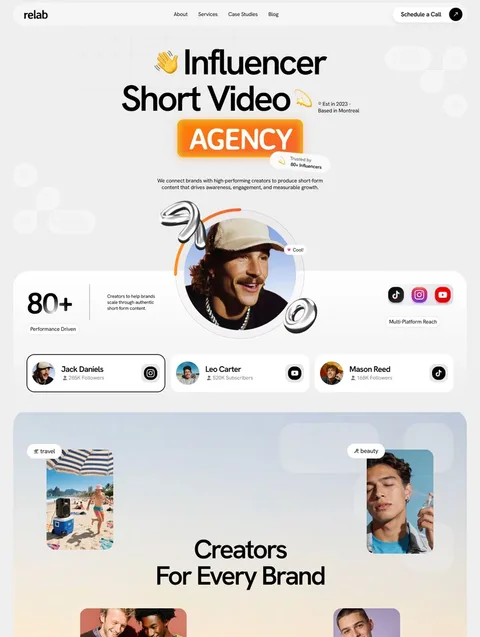
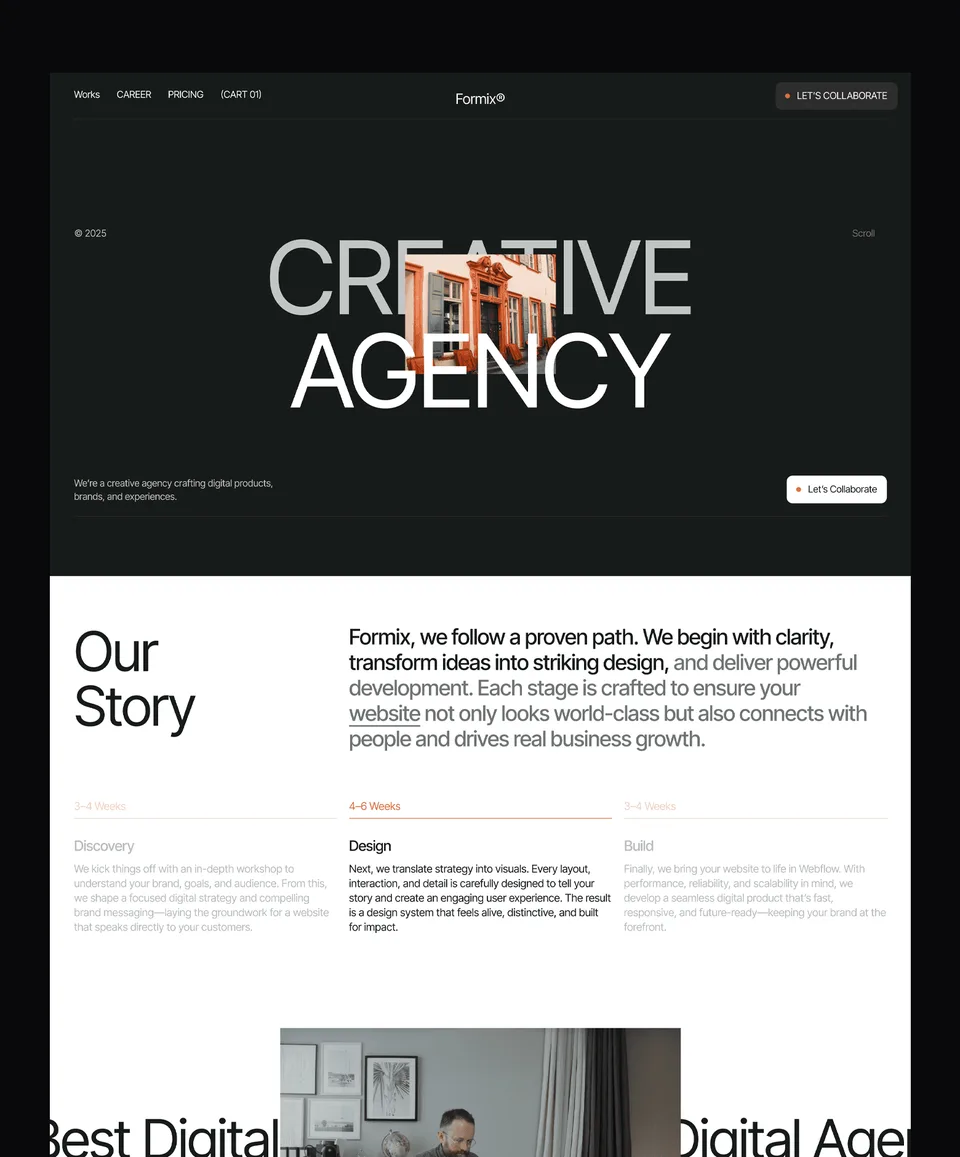
All 42 templates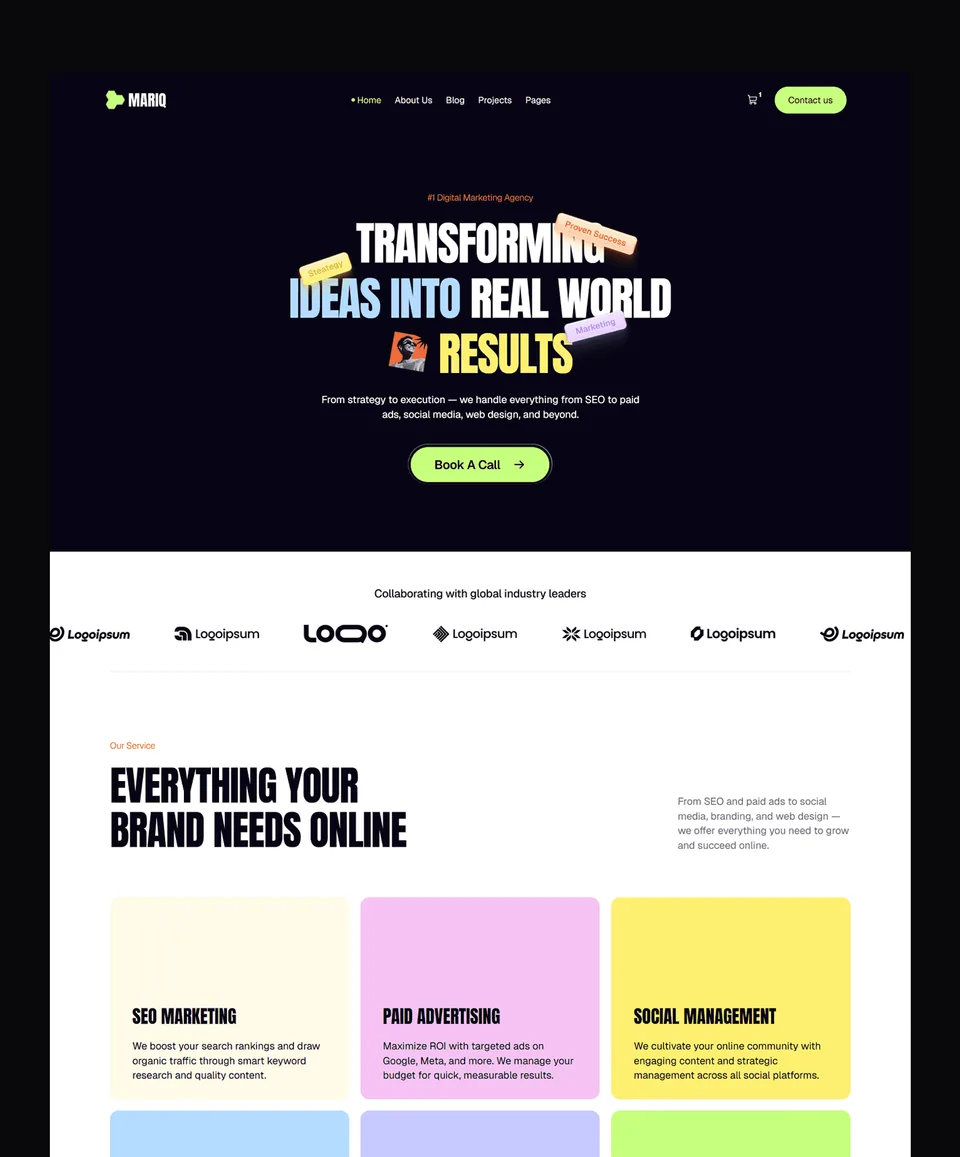


Frequently asked questions
What should a restaurant website include?
Opening hours, the address and a book or order button on the home page, a text menu with prices and dietary labels, an about page, a private dining page if you host events, and contact details in the footer of every page.
Should a restaurant menu be a PDF?
No. Publish the menu as text on its own page, so it loads fast on a phone, works with screen readers and can be read by search engines. Link a printable PDF under it if guests ask for one.
Is it cheaper to take orders on your own website than through delivery apps?
Usually, yes. Uber Eats lists marketplace delivery fees of 20% to 30% depending on the plan, against 2.5% plus $0.29 per order for orders placed through its own-website ordering tool.
How much does a restaurant website cost?
A single restaurant can run one for the price of a hosting plan: Framer Basic is $10 a month and Webflow Basic is $15 a month on yearly billing. Add a domain, your booking and ordering tools, and a template or design work if you need it.
What structured data should a restaurant website use?
Use the schema.org Restaurant type with the address, telephone, opening hours, servesCuisine, hasMenu and acceptsReservations properties. Keep the details identical to your Google Business Profile.
Can I use a free template for a restaurant website?
Yes. Several Waida Studio templates are free on Framer with a free account and can be adapted for a restaurant. Waida doesn't make a restaurant-specific template, so you add the menu, booking widget and ordering link yourself.
Restaurant website design comes down to a few things done well: hours and the address on the first screen, a menu in text with prices and dietary labels, one button to book or order, direct ordering before the delivery apps, and photos that load fast. Get those right and keep them current, and the design can stay simple.
If you want a head start, the free Framer templates cost nothing with a Waida account, and paid versions of our templates start at $39. If no one on your team has time to adapt one, our template customisation service does it for $499, delivered in 7 days.

More from Kazi
Related articles
More in Use Cases
Photography Website Design: What to Include in 2026
What good photography website design looks like in 2026: the pages, fast galleries, client proofing, image SEO, copyright and where to build it.
Personal Portfolio Website: What to Include in 2026
What a personal portfolio website needs in 2026: the sections, one page or several, a domain with your name, where to build it and a launch checklist.
Church Website Design: What a Church Site Needs in 2026
What a church website needs in 2026: service times on the first screen, a plan-your-visit page, a sermon archive, licensed livestreams and a short giving path.