Framer SEO Guide: How to Rank a Framer Site in 2026
Framer ships with strong SEO defaults — but the defaults alone won't rank your site. This guide covers the tactics that matter in 2026.

Framer is a strong SEO platform in 2026 — server-side pre-rendering, automatic sitemaps, fast page loads, and clean HTML output. But the platform handles the technical baseline; ranking still depends on what you do with titles, meta descriptions, headings, internal linking, content structure, and (in 2026) AI-answer-engine optimization. Use Framer's built-in SEO panel for per-page meta, set your CMS to auto-populate metadata for dynamic pages, structure content around clear questions and answers for LLM citations, and avoid the four mistakes covered below.

Page settings in Framer: the meta title, description, search result preview and social preview image are all set here, page by page.
What Framer Handles Automatically
Framer is genuinely well-built on the technical SEO side. By default, every published Framer site gets:
Automatic sitemap.xml. Framer generates and updates the sitemap on every publish. You can find it at yoursite.com/sitemap.xml. Submit this URL to Google Search Console once, and you're done.
Automatic robots.txt. Framer generates a sensible default at yoursite.com/robots.txt. The auto-generated file allows search engine crawlers and configures crawl rules appropriately for most sites.
Server-side pre-rendering. Pages are rendered on the server at publish time, so search engines and AI crawlers get full HTML on the first request. No JavaScript execution required. This is the single biggest technical advantage Framer has over client-side React frameworks for SEO.
Self-referencing canonical tags. Every page automatically gets a canonical tag pointing to itself, which prevents duplicate content issues with www vs. non-www and trailing slashes.
Automatic SSL. HTTPS works out of the box on every custom domain. Google uses HTTPS as a ranking signal, and Framer handles certificate issuance and renewal automatically.
Image optimization. Images are served in WebP where supported, lazy-loaded by default, and responsively sized. Faster page loads, better Core Web Vitals.
Clean HTML output. No bloated WordPress-style plugin output, no unused CSS, no render-blocking scripts beyond what Framer needs to run. Most Framer sites hit 90+ on PageSpeed Insights without any manual tuning.
Indexing controls. A simple toggle in page settings lets you hide pages from search engines (useful for "thank you" pages, draft content, internal-only pages).
That's the technical foundation. None of it requires configuration. But — and this is the part most Framer SEO advice glosses over — the foundation alone won't rank your site.
What You Have to Set Manually
Framer gives you the controls; you have to use them. Here's the checklist that separates Framer sites that rank from Framer sites that languish:
Meta Titles and Descriptions
Every page needs a unique meta title and meta description. Framer's site settings let you set defaults at the site level and override per page.
- Meta title: 50–60 characters. Include your primary keyword near the start. End with your brand name only if there's room (
Primary Keyword | Brand). - Meta description: 140–160 characters. Summarize what the reader gets from clicking. Include your keyword naturally, not stuffed.
For CMS pages (blog posts, projects, products), don't write metadata one page at a time. Add a "Meta Title" and "Meta Description" field to your CMS collection, then bind those fields into the page template using {{Meta Title}} and {{Meta Description}} syntax in Framer's SEO panel. Now every CMS entry pulls its own metadata automatically.
Heading Structure
This is where most Framer sites silently break their own SEO. Framer's text styles default to visual sizing, not semantic tagging — designers pick "H2" because it looks the right size, not because it's structurally an H2.
The correct setup:
- One H1 per page, containing the primary keyword.
- H2s for main sections.
- H3s for subsections within those sections.
In Framer, open the Accessibility panel for each text element and confirm the semantic tag matches the visual hierarchy. Every page should have exactly one H1 — not zero, not two. This is one of the highest-leverage SEO fixes you can make.
URL Slugs
Framer auto-generates slugs from page titles, which often produces messy URLs like /blog/the-complete-guide-to-framer-seo-and-how-to-rank-your-website-in-2026. Override the auto-generated slug in page settings.
Good slugs:
- Short (3–6 words ideal).
- Lowercase.
- Hyphens between words, never underscores or spaces.
- Include the primary keyword.
Bad slug: /blog/the_ULTIMATE-Guide_to_Framer-SEO Good slug: /blog/framer-seo-guide
If you change a slug after publishing, set up a 301 redirect from the old path to the new one in Framer's Redirects panel. Without this, any inbound links to the old URL break and you lose whatever ranking the page had built.
Image Alt Text
Every image needs descriptive alt text. Not for SEO directly — alt text is mostly an accessibility feature — but Google uses it to understand image content, and image search traffic is non-trivial for visually-rich sites.
Write alt text that describes the image, not the keyword. "Designer's portfolio homepage showing case study grid" is good. "Framer template Framer template Framer SEO" is keyword-stuffed nonsense that will get you penalized.
Open Graph Images
Set custom Open Graph images for important pages — not just the auto-generated screenshot. When your link gets shared on Twitter, LinkedIn, or Slack, the OG image is the thumbnail that shows. Frame-perfect ones drive 2–3× the click-through of the default.
Recommended size: 1200×630px, with your title text large enough to read at thumbnail scale.
Internal Linking
Framer doesn't auto-link your content. You have to deliberately link related pages to each other.
The rule of thumb: every content page should link to at least two other pages on your site, and at least one commercial page (a template, a service, a category page). For a blog post, this might mean linking to a related article and to a relevant product. For a portfolio case study, linking to a services page and another case study.
Internal linking is one of the most underused SEO tactics on Framer sites. The platform doesn't push you toward it — you have to build the habit yourself.
CMS SEO: The Right Way to Set It Up
For sites with CMS-powered pages — blogs, portfolios, products, case studies — manual per-page SEO doesn't scale. Set it up dynamically.

A Framer CMS collection: each blog post is one row, with its status, slug, image, category and date.
Inside your CMS collection, add three fields:
- Meta Title — short text, 60-character limit.
- Meta Description — short text, 160-character limit.
- OG Image — image field for social share thumbnails.
In the page template (the layout that renders each CMS entry), open the page's SEO panel and bind:
- Title field →
{{Meta Title}} - Description field →
{{Meta Description}} - OG Image →
{{OG Image}}
Now every blog post, project, or product you add to the CMS has its own metadata, written by you per entry, automatically inserted into the rendered page's HTML head. This is the single highest-leverage SEO move on a CMS-driven Framer site.
AEO and LLM Optimization in 2026
In 2026, ranking on Google is half the battle. The other half is being cited by AI answer engines — ChatGPT, Perplexity, Claude, Gemini — when users ask questions in chat instead of searching.
The good news: Framer's pre-rendering means AI crawlers can read your content cleanly. The bad news: most Framer sites don't structure content for citation.
Here's what works:
Open with a direct answer. The first 40–80 words of every content page should answer the question the page is about, in complete sentences. LLMs extract these directly into chat answers. If your article opens with three paragraphs of preamble before the answer, you'll get the traffic but not the citation.
Use questions as headings. Format H2s and H3s as the actual questions your readers (or their AI assistants) would ask. "How does Framer hosting work" beats "Hosting Architecture" for citation likelihood.
Add JSON-LD structured data. Framer doesn't add structured data automatically, but you can paste JSON-LD blocks into a page's custom code section. The most valuable schemas for content sites: Article for blog posts, FAQPage for FAQ sections, Product and SoftwareApplication for products, Organization site-wide. Validated structured data dramatically increases citation rate.
Build a /llms.txt file. A plain-text file at yoursite.com/llms.txt that tells AI crawlers what your site is about, lists your most important pages, and provides canonical URLs for key topics. Low effort, meaningful upside. On Pro and above, you can deploy this through Framer's Well-Known Files feature.
End articles with a distributed FAQ section. Each FAQ is a 50–150 word question-and-answer pair, marked up with FAQPage schema. These are citation magnets — LLMs love extracting clean Q&A pairs from structured FAQs.
For a deeper look at the platform side of this, the INSIDEA AEO breakdown for Framer is worth reading.
Common Mistakes That Quietly Kill Rankings
Four mistakes we see repeatedly on Framer sites:
1. Multiple H1s per page. Designers using H1 as a visual style for any large heading. Fix: one H1 per page, all other large headings tagged as H2.
2. Auto-generated slugs left as-is. /blog/welcome-to-our-new-blog-post-about-framer-and-design-trends ranks worse than /blog/framer-design-trends. Fix: override every slug.
3. No internal linking strategy. Pages live in isolation, never link to each other. Fix: every content page links to at least two others, plus one commercial page.
4. Animations applied to public pages indiscriminately. Heavy animations and prototype-style components introduce JavaScript overhead, hurt Core Web Vitals (especially CLS and INP), and slow first paint. Fix: keep animations purposeful. Reserve them for hero sections, key transitions, and brand moments — not every section.
A Checklist for Every New Framer Page
Before publishing any new page on a Framer site:
- Unique meta title, 50–60 characters, primary keyword near the start
- Unique meta description, 140–160 characters, includes the keyword naturally
- Custom URL slug, short and keyword-bearing
- One H1 with the primary keyword
- Logical H2/H3 hierarchy under the H1
- Alt text on every image
- Custom Open Graph image (1200×630)
- At least two internal links out to related pages, plus one to a commercial page
- If applicable, JSON-LD structured data added via custom code
- If a content page, opens with a 40–80 word direct answer to the page's main question
For Framer to genuinely rank well, this checklist gets executed every time. The platform handles the technical foundation; the content discipline is yours.
The templates in our Framer collection are built the way this guide describes — semantic headings, per-page metadata and clean structure — so most of the work above is already done before you start editing.
Framer templates to start from
All 37 Framer templates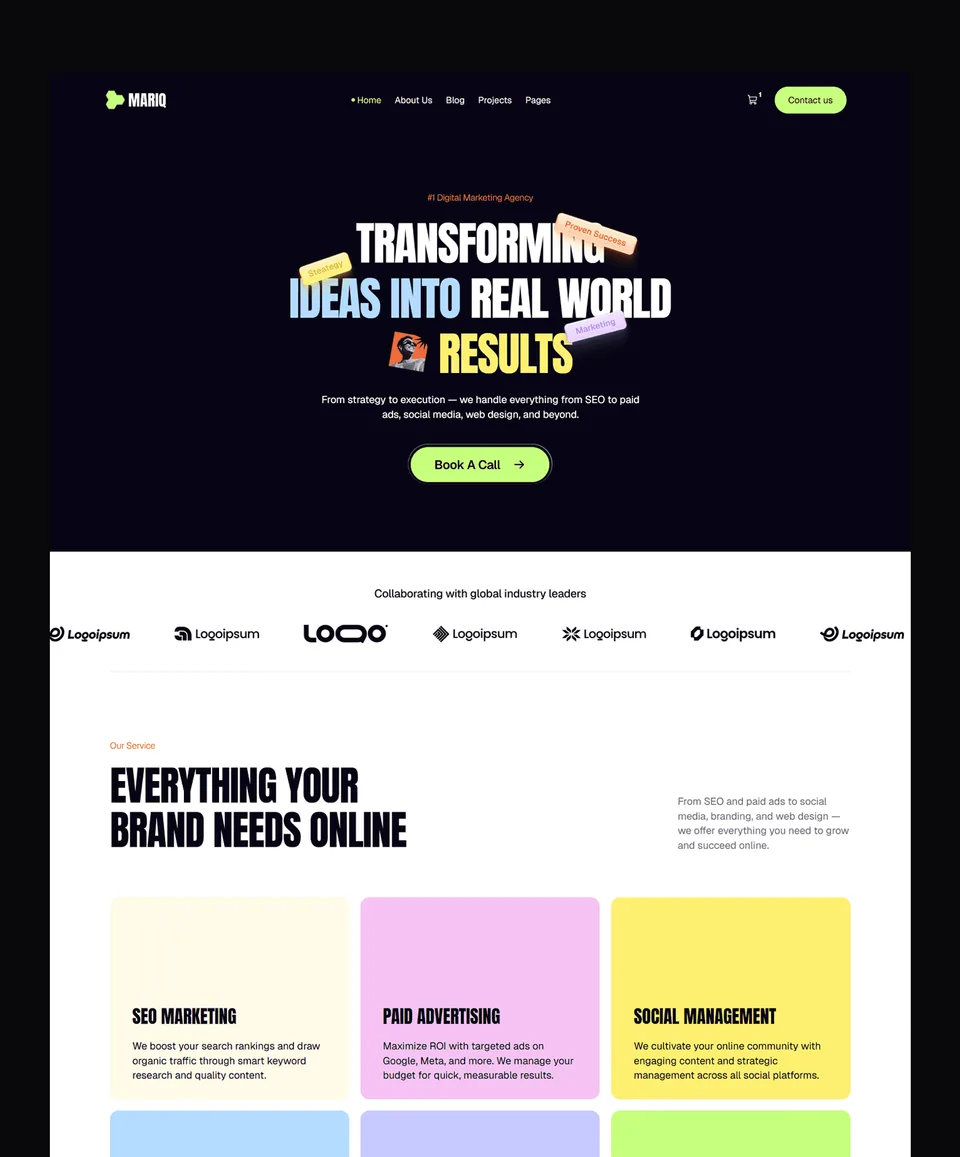

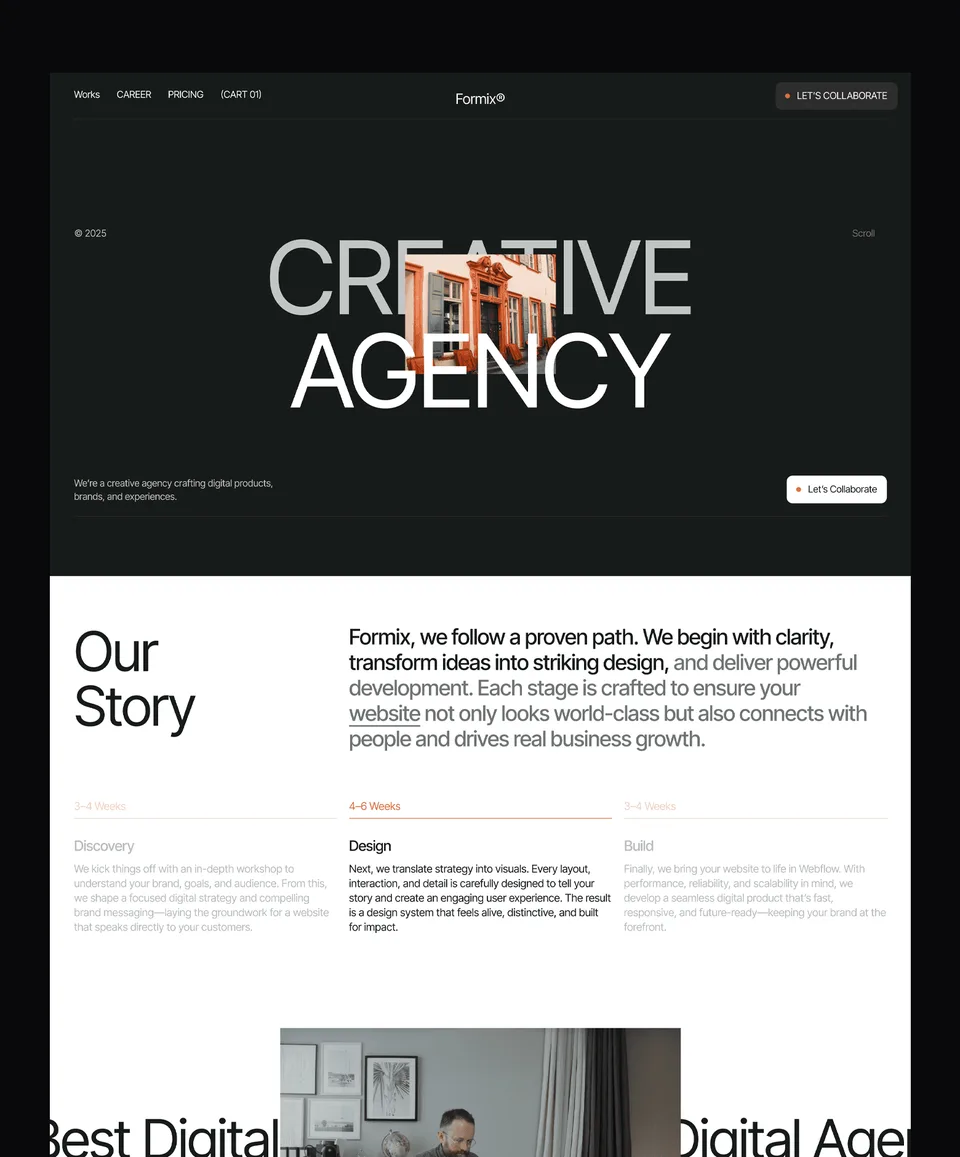
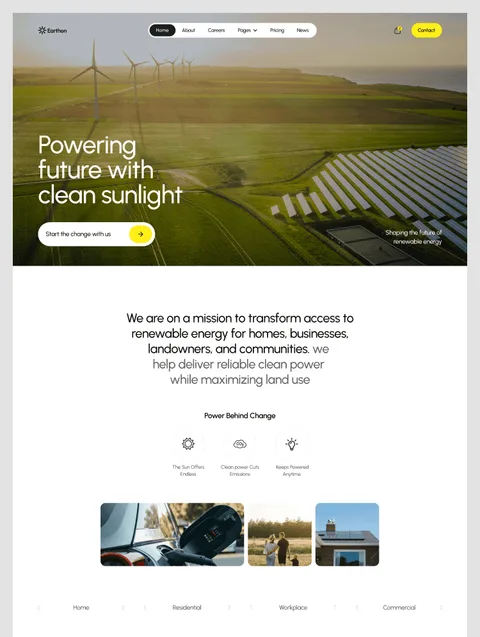

Frequently asked questions
Is Framer good for SEO compared to Webflow or WordPress?
Yes, in 2026. Framer handles the technical foundation as well as Webflow does — server-side rendering, automatic sitemaps, fast page loads, clean HTML — and better than most WordPress setups. The differences come down to ecosystem (WordPress has more plugins, Webflow has more agency tooling) and content scale (WordPress is better for thousands of articles). For most marketing sites, portfolios, and content sites under a few hundred pages, Framer ranks competitively.
How long does it take a new Framer site to rank?
Indexing happens within days for most sites. Ranking for competitive queries takes 3–6 months minimum, often 6–12 months for established competitive territory. Long-tail and lower-competition keywords show movement in 4–8 weeks. New domains take longer than migrated domains with existing authority.
Does Framer support schema markup?
Yes — manually. You add JSON-LD structured data through Framer's custom code section (page-level or site-level). Framer doesn't auto-generate schema for you. The most valuable schemas for content sites are Article, FAQPage, Product/SoftwareApplication, Organization, and BreadcrumbList.
Can I edit Framer's robots.txt?
On most plans, only partially. The auto-generated robots.txt is sensible for most sites. Full control over robots.txt typically requires the Enterprise tier. For 95% of users, the default is correct.
What's the most important thing I can do for SEO on a Framer site?
Set up CMS-bound metadata for any collection-driven content (blog, projects, products) and write a strong, distinctive meta title and meta description for every static page. Those two changes — done across the whole site — outperform almost any other single tactic. Heading hierarchy is the next most valuable fix.
For more on building Framer sites that perform, see our complete Framer guide.

More from Kazi
Related articles
More in Framer
Figma to Framer: How to Move a Design in 2026
How to move a Figma design into Framer with Framer's free plugin: preparing the file, copying and pasting, fixing fonts and breakpoints, and publishing.

Best Framer SaaS Templates: 10 Landing Page Picks for Startups in 2026
Ten Framer templates for SaaS and AI startups, from single landing pages to full product sites. Seven are free, with who each one suits.

Framer Pricing in 2026: Every Plan, the Free Plan and the Student Discount
Free, Basic, Pro and Enterprise compared: what the free plan allows, how the student discount works, and the costs beyond the plan.